
Electrostatic nanoporous microspheres for targeted crop pest control
Pollen-inspired, electrostatically charged nanoporous microspheres deliver pesticides in controlled multi-stage release, improving pest contact and reducing environmental impact versus broadcast methods.
Overview
This technology offers a novel, pollen-inspired delivery system for pesticides using electrostatically charged nanoporous microspheres. Designed to reduce the environmental footprint of pest treatment while maintaining strong efficacy, the microspheres can be tailored to the life cycle of specific pests. Potential applications include crop protection, forestry pest management, and vector-borne disease control, offering a flexible alternative to conventional broadcast pesticide application.
Technical specifications
Key features:
- Controlled multi-stage release of active ingredients, enabling fast-acting initial kill and prolonged treatment customizable to a pest's life cycle
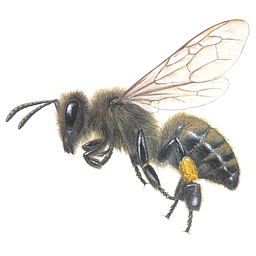
- Electrostatic adhesion that causes microspheres to transfer from plants or surfaces to pests, similar to pollen transferring to bees, ensuring sustained contact
- Chemistry-independent delivery that allows rotation of different insecticide classes, helping reduce resistance buildup
- Field-validated dissemination, with proof-of-concept studies showing 90.9% transfer rates from small mammal visits and spread up to 14 meters along trails and burrow entrances
- Demonstrated adherence on arthropods including houseflies, mosquitoes, and ticks, even when the animals move freely
- Current formulation uses polyvinyl chloride; future development targets biodegradable polymers to eliminate microplastic concerns
Technology readiness level
The technology has progressed through proof-of-concept field studies for tick control via rodent hosts, with demonstrated microsphere transfer and arthropod adhesion. The current polyvinyl chloride formulation has been tested with two active ingredients. A proposed one-year exploratory project aims to identify suitable biodegradable polymers and solvents, characterize microsphere properties through laboratory analysis, and conduct bioassays with representative arthropod genera. This next phase is intended to expand the range of compatible active ingredients and demonstrate efficacy against targeted crop pests based on their phenology.
About BanfieldBio Inc.
BanfieldBio Inc. is a technology contract research company specializing in the development of innovative pest control biotechnologies and insect monitoring solutions. Based at an 8-acre research facility near Seattle, Washington, the firm focuses on creating novel methods to mitigate pests that impact global health, including forestry and vector-borne disease research. The company operates through a collaborative model, partnering with universities, NGOs, and government agencies—such as the USDA and various military health centers—to investigate new technologies, demonstrate their efficacy, and commercialize effective products. Their proprietary offerings include specialized insect trapping devices like the blue vane trap and multiple funnel traps, alongside intellectual property developed for monitoring and managing pest populations.
This expertise is critical for clients and partners involved in entomological research, public health, and vector biology, where understanding and controlling pest movement is essential. BanfieldBio solves complex challenges in the pest control market by applying advanced biological, chemical, and mechanical insights to develop tools that do not rely on standard, off-the-shelf ingredients. Their work is supported by federal research grants and contracts, with a proven history of developing patented trapping systems and diagnostic methods, such as integrated frameworks for arthropod acquisition and pathogen identification. Through these efforts, the company provides essential support for large-scale field studies, pollinator research, and public health initiatives worldwide.

delivered to your inbox.