

Iot-based real-time sensor system for early crop disease detection
Low-cost IoT sensor platform combining Raspberry Pi, RGB/multispectral cameras, solar power, and weather station for real-time crop disease monitoring. Enables timely disease management, resource conservation, and predictive epidemiology across wheat, apple, and other crops.
Overview
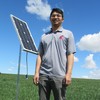
This solution is a low-cost Internet-of-Things (IoT) sensor system designed for real-time crop disease detection and monitoring. Built around a Raspberry Pi controller integrated with RGB and multispectral cameras, a solar panel, and a weather station, the system captures crop growth and development data directly in the field. By combining continuous environmental monitoring with image-based sensing, it supports timely management decisions that conserve personnel time and travel, optimize the use of water and agrochemicals, and reduce crop losses through earlier intervention. The platform also enables prediction of plant disease epidemiology by linking weather data with disease progression patterns, making it valuable for both crop protection and breeding programs.
Technical specifications
Core hardware components:
- Raspberry Pi controller serving as the central processing unit
- RGB camera for standard visual imaging of crop canopy and growth stages
- Multispectral camera for detecting subtle changes in plant health not visible to the human eye
- Solar panel integration for autonomous, off-grid power supply in remote field locations
- Weather station for continuous tracking of environmental conditions that influence disease development
Data connectivity and processing:
- Connectivity options under exploration include Wi-Fi with SIM card slot, LoRaWAN, TV white space (FarmBeats), and satellite internet (Starlink)
- Cloud integration through Microsoft Azure for transmitting raw or processed data
- Edge computing capability within the sensor system to pre-process images before transmission
- Image processing and machine/deep learning techniques applied in the cloud for anomaly detection
Application areas:
- Real-time disease monitoring for high-incidence diseases such as stripe rust in wheat and fire blight in apple
- Nutrient deficiency detection
- Weed detection and management
- Breeding program support for trait evaluation across winter and spring wheat
- Disease epidemiology prediction through weather-disease correlation
Technology readiness level
The sensor system has already been developed and deployed in winter and spring wheat breeding programs, with the solar panel and weather station successfully integrated. Initial validation confirms that the sensors reliably capture crop growth and development as anticipated. The current development phase focuses on establishing sensitivity specifically for disease detection applications and validating real-time data acquisition across one full field season in farms or orchards with high disease incidence. Future work includes expanding connectivity options, completing cloud integration, and applying machine learning models for automated anomaly detection. The system is positioned for broader application across additional crops and conditions beyond its initial wheat focus.
About Washington State University
Washington State University is a comprehensive public land‑grant research university serving the state through a multi‑campus system anchored in Pullman. Industry engagement runs through a research and technology park in Pullman, a health sciences campus in Spokane integrated with regional hospitals, and a statewide extension network linking faculty with companies and communities. The Tri‑Cities campus sits minutes from a U.S. Department of Energy national lab, enabling collaborations, shared facilities access, and talent pipelines for regulated sectors. Research is supported by competitive federal funding from agencies such as NSF, NIH, USDA, DOE, and DoD. A dedicated technology transfer office manages IP, licensing, and startup support, complemented by incubator and pilot‑scale resources.
Inquire about this partnering listing
Looking for
Industry applications

delivered to your inbox.