

Remote garment fit quantification using CT and 3D scanning
Innovative solution leveraging CT and 3D scanning for precise remote measurement of garment fit, focusing on incontinence products. Enhances fit optimization through accurate air gap data, offering significant improvements in product design and comfort.
Overview
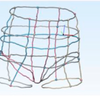
This groundbreaking technology uses computerized tomography (CT) and 3D scanning to accurately measure the fit of garments, specifically incontinence products, by assessing air gaps between the body and the garment. With an accuracy of 1 mm or less, this solution enables precise fit assessments on dynamic mannequins, providing key insights to optimize product fit based on anatomical contours and functional elements. By integrating advanced imaging data, the solution aims to revolutionize the design and comfort of functional apparel and medical devices.
Technical specifications
Key features:
- Utilizes CT scanning to measure both exterior and sub-surface body dimensions, capturing dynamic air gap data.
- Combines traditional 3D body scanning with CT data for comprehensive anthropometric analysis.
- Offers a novel approach to garment fitting by comparing standing and seated anthropometry with dynamic CT scan data.
- Enables enhanced ergonomic analysis and fit optimization for a variety of products, such as gloves, respirators, and compression garments.
- Potential exploration of millimeter wave radar technology for cost-effective air gap measurement.
Technology readiness level
Currently at Technology Readiness Level 4, this technology has undergone initial validation in related applications such as glove-hand fitting systems. Ongoing research aims to further validate and refine the method for incontinence garments, with a 12-18 month timeline for completion. The integration of precise body data into product engineering positions this technology as a cutting-edge solution for improving garment fit across diverse body types and sizes.
About University of Minnesota
The University of Minnesota is a flagship, comprehensive public research university spanning multiple campuses, with a large research enterprise and clinical integration. Industry engages through co-located labs on the Twin Cities campuses, access to an academic health system for clinical translation, and pilot and field-testing facilities that speed scale-up. A statewide extension network and outreach centers provide real-world sites and data partnerships across Minnesota, while proximity to a dense medtech and Fortune 500 corridor enables frequent collaboration. Research is supported by competitive federal funding, including NIH, NSF, DOE, USDA, and DoD. A dedicated technology transfer office manages IP, licensing, sponsored research agreements, and startup incubation to speed commercialization.
Inquire about this partnering listing
Industry applications

delivered to your inbox.