Kraft Heinz × Halo
How Michroma went from Innovation Challenge winner to Future Food-Tech spotlight
Kraft Heinz and iFAB used Halo to find the startup solving one of food’s most urgent problems, and what happened next exceeded everyone’s expectations.
40
Proposals received via Halo
11
Countries represented
3
Proposals advanced to finalist stage
-
Challenge
Natural colorants fade under heat, shift with pH and cost a multiple of synthetic dyes. Kraft Heinz and iFAB wanted a precision fermentation technology for nature-identical food colors, ready to bridge the lab-to-pilot gap.
-
Solution
A joint Innovation Challenge hosted on Halo, with precise requirements: lab-scale feasibility, a credible path to economic viability and a clear mechanism for stability, assessed against a structured framework.
-
Results
40 proposals from 11 countries, 3 finalists, and Michroma named winner: a year of priority access to IBRL's fermentation infrastructure, mentorship from Kraft Heinz and IBRL, and a slot at Future Food-Tech San Francisco.
The hook
The food industry has a dirty secret hiding in plain sight. Flip over almost any brightly colored snack, candy, or cereal box and you’ll find it: Red 40, Yellow 5, Blue 1. Synthetic dyes approved decades ago, now facing mounting regulatory pressure, consumer backlash, and growing evidence of harm, particularly to children. The industry has known for years that a transition is coming. What it hasn’t had is a credible path to get there.
Natural colorants exist, of course. But they fade under heat, shift with pH, and cost a multiple of their synthetic counterparts. For food companies operating at scale, “natural” has meant “unstable.” The gap between what consumers want and what science could deliver had remained stubbornly wide.
Ricky Cassini knew exactly where that gap was, and believed he’d found a way to close it.
“At Michroma, we are making food dyes to replace the artificial dyes we have in the food supply, such as Red 40 and Yellow 5, with natural colorants that are more stable and produced by mushrooms through precision fermentation,” said Ricky Cassini, CEO & Co-founder of Michroma.
The science was promising. What Michroma needed was the right partner to help them prove it could scale.
The challenge
Michroma had the technology. What stood between them and real-world impact was the manufacturing gap that consumes most promising biotech startups: the treacherous leap from kilograms to tons.
Precision fermentation is elegant at lab scale. Organisms are coaxed into producing specific compounds (in Michroma’s case, stable, vibrant colorants derived from fungal metabolism) with remarkable consistency. But the economics, the equipment, the process parameters: everything changes when you move from a bench bioreactor to an industrial facility. What breaks? What needs to be re-optimized? Who has actually done this before and can share what they learned?
For a startup, accessing that institutional knowledge, and the physical infrastructure to put it into practice, is rarely straightforward. Pilot-scale fermentation equipment is expensive. The people who understand scale-up are inside large companies or specialized research institutes, not readily available for a cold call. And the food companies most invested in solving the synthetic dye problem weren’t necessarily easy to reach through traditional channels.
Michroma needed two things simultaneously: deep technical mentorship on scale-up, and a credible connection to a food industry partner who understood the urgency of the transition. Those two things rarely arrive together.
The turning point
Kraft Heinz and iFAB (the Illinois Fermentation and Agriculture Biomanufacturing Hub, anchored by the University of Illinois Urbana-Champaign’s Integrated Bioprocessing Research Laboratory) were searching for the same thing Michroma had to offer: a precision fermentation technology ready to bridge the lab-to-pilot gap, focused specifically on nature-identical food colors.
They hosted their joint Innovation Challenge on Halo.
The challenge was precise in its requirements: fermentation-based color technologies with demonstrated lab-scale feasibility, a credible path to economic viability, and a clear mechanism for stability, the attributes that had made synthetic dyes so durable and natural alternatives so frustrating. Halo’s platform surfaced Michroma to the evaluation teams at Kraft Heinz and iFAB, enabling both organizations to assess the company’s technology against a structured framework rather than relying on chance encounters at conferences or secondhand referrals.
Halo’s platform drew 40 proposals from applicants spanning 11 countries: the US, UK, India, Canada, Denmark, Japan, France, Italy, Germany, Australia, and Ethiopia. Of those, 26 were submitted for full evaluation, with 3 advancing to finalist stage.
Michroma’s approach stood out from the field. Fungal fermentation, producing stable, heat- and pH-resilient colorants from mushrooms, addressed the precise performance gap that had made natural dye adoption so difficult. The technology checked every box the challenge had defined.
At the iFAB Biomanufacturing Summit in March 2026, the announcement came: Michroma selected as winner of the Kraft Heinz × iFAB Innovation Challenge.

We are very excited to now be part of this community within the iFAB Tech Hub in Illinois. It’s great to have access to companies, including fermentation companies, that can provide help with any challenges we may have throughout this process.
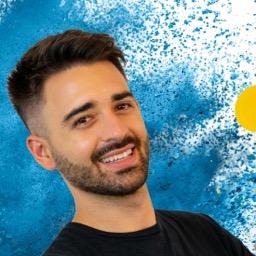 Ricky CassiniCEO & Co-founder, Michroma
The transformation
Winning the challenge wasn’t a trophy moment. It was the beginning of something operational.
Michroma spent a week in Champaign-Urbana inside IBRL, one of the most sophisticated bioprocessing facilities in the country, having real conversations about what scale-up actually looks like. Not the theoretical version, but the practical one: what breaks when you go from kilograms to tons, how to de-risk manufacturing decisions, and what a food company actually needs to see before it adopts a new ingredient.
Good science is table stakes. You also need partners who understand the manufacturing reality.
Ricky CassiniCEO & Co-founder, MichromaThrough the challenge, Michroma gained:
- Priority scheduling at IBRL for one year: preferred access to bench, pilot, and demonstration-scale fermentation infrastructure spanning 1,500 L to 10,000 L bioreactors, downstream processing, and analytical labs.
- Structured mentorship from technical experts at both Kraft Heinz and IBRL on process optimization, formulation, and scale-up strategy.
- EnterpriseWorks affiliate membership: access to a regional network of biomanufacturing innovators and resources.
- A presentation slot at Future Food-Tech San Francisco 2026, within the Kraft Heinz breakout session, connecting Michroma with industry leaders, investors, and global food companies on one of the most visible stages in food innovation.
One challenge. Two major platforms, IBRL and Future Food-Tech, unlocked simultaneously.
The proof
The double recognition tells its own story.
Michroma entered the challenge as a startup with strong science and a credible vision. They left it as a recognized player in the precision fermentation ecosystem, with the infrastructure, partnerships, and visibility that typically take years to build through conventional channels.
“To Halo for hosting the platform and connecting us,” said Ricky Cassini.
The takeaway
The synthetic-to-natural transition in food ingredients isn’t a question of if. It’s a question of which technologies cross the manufacturing and performance threshold first, and who helps them get there.
Michroma’s story illustrates what becomes possible when the right challenge is designed with precision, hosted on a platform that can surface the innovators who are genuinely ready, and backed by partners, Kraft Heinz and iFAB, who provide more than a winner’s announcement. They provided infrastructure. Mentorship. A stage.
Halo connected the parties. The challenge did the filtering. And the result was a match that accelerated Michroma’s trajectory by years, while giving Kraft Heinz and iFAB exactly the kind of partner they were searching for: not the obvious candidate, but the right one.
For innovation teams facing the same pressure (find the breakthrough before the competition does, validate it before committing resources, build the relationship before the technology matures), this is the model.
Structure the question well. Open it to the right network. Let the best science rise.
 About Kraft Heinz
Kraft Heinz is an American multinational food manufacturer, formed in 2015 by the merger of Kraft Foods Group and the H.J. Heinz Company and co-headquartered in Chicago and Pittsburgh. Its brands include Kraft, Heinz, Oscar Mayer, Philadelphia, Lunchables and Velveeta.
More customer stories



Ready to find your next partner?
Tell us about your innovation goals and we’ll show you how Halo can help you find the right partners faster.
- Get alerts for new partners & solutions
- Post to Halo's marketplace
- Explore your company's network