

Museomics platform for assessing crop wild relative genetic diversity in seed banks
A museomics approach using targeted enrichment-sequencing of herbaria samples to assess genetic diversity and disease resistance gene (R-gene) content in crop wild relatives (CWRs). Enables comparison between seed bank collections and wild populations to guide conservation policy and breeding programs for sustainable agriculture.
Overview
Seed banks are the primary source of germplasm for introducing new traits such as disease resistance into crops, yet it remains unclear whether they adequately capture the full genomic diversity of crop wild relatives (CWRs). This solution applies a museomics approach—leveraging targeted enrichment-sequencing of historical herbaria specimens—to assess genetic diversity and disease resistance gene (R-gene) content in CWRs. By comparing results across stock centres and herbaria for important vegetable CWRs, the platform can advise conservation policies and identify where new wild collections are needed. The approach avoids the cost and labor of fresh field expeditions while delivering actionable insights for breeding programs targeting stress resistance.
Technical specifications
Key features:
- Targeted enrichment sequencing (myBaits, AnArbor Biosciences) of R-genes and genetic diversity markers from herbaria and seed bank samples
- Sequencing performed on a PacBio Sequel II platform for high-resolution data
- Novel Markov clustering-based comparative genomics pipeline for reliable assessment of overall genetic diversity and R-gene capture
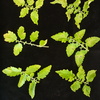
- Application to Solanum chilense, a well-studied tomato CWR and source of virus resistance
- Expert-curated sampling strategy based on SolanaceaeSource.org data, targeting specific populations and geographic locations
- Comparative analysis framework evaluating whether seed banks capture the genomic diversity present in wild herbaria specimens
Technology readiness level
The methodology has been validated through prior work demonstrating that tomato populations from seed banks can be used to assess evolutionary history, and that targeted enrichment sequencing for R-genes effectively captures diversity across different populations. Earlier studies confirmed that R-genes are highly diverse in a tomato CWR. The next validation phase focuses on S. chilense, with planned enrichment and sequencing of samples from two populations across both herbaria and seed banks at a budget of USD 15,000. This work represents an early-to-mid stage technology validation, moving from proof-of-concept toward practical deployment for conservation policy guidance and breeding program support.
About Technical University of Munich
A leading public technical university anchored in Munich with campuses across Bavaria and a growing presence in Heilbronn, TUM pairs scale with an entrepreneurial culture. The Garching research campus co‑locates university labs with national institutes and start‑ups, while an integrated university hospital enables clinical translation. An Entrepreneurship Center with UnternehmerTUM and the TUM Venture Labs network link companies to prototyping, accelerators, and deep‑tech talent. Research draws competitive support from the German Research Foundation, federal ministries, Bavarian programs, and the European Union. TUM ForTe and its Patent & Licensing Office manage IP, streamline contracting, and offer a fast‑track model for startup licensing.
Inquire about this partnering listing
Looking for
Industry applications

delivered to your inbox.