
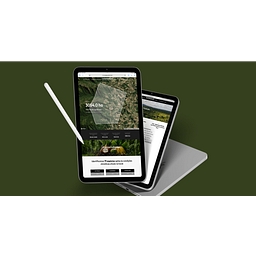
Scaling climate-resilient agroforestry solution to restore ecosystems and increase farmer income.
Brazil has experienced a 460% increase in climate-related disasters since the 1990s, from prolonged droughts in the Amazon to floods and extreme heat in agricultural regions. Brazil’s food sector accounts for 74% of national greenhouse gas emissions, while over 90 million hectares of degraded pastureland remain underproductive and vulnerable to erosion, fire, and climate shocks.
Rural communities are on the front lines. Millions of small and mid-sized farmers depend on low-margin cattle or monoculture systems that degrade soil, reduce biodiversity, and increase climate vulnerability. Climate-resilient agroforestry systems can restore ecosystems, diversify income, and reduce risk, yet transitioning is complex, capital-intensive, and technically demanding. Farmers lack access to planning and management tools, training, structured financing, and reliable markets for diversified crops and carbon credits.
Globally, agriculture and land-use change account for nearly one-third of greenhouse gas emissions and are the leading drivers of deforestation and biodiversity loss, yet agriculture is also among the sectors most exposed to climate risk. Despite the urgent need for nature based solutions, there is a lack of scalable systems that integrate land restoration, workforce training, financing, and market access. As a result, degraded land persists, rural incomes stagnate, and communities lack viable pathways into the growing green economy.
Courageous Land’s Agroforestry Intelligence Platform is a technology-enabled system that helps farmers transition degraded pasture or monoculture into profitable, climate-resilient agroforestry.
Using geospatial data, agronomic modeling, and carbon methodologies, the platform generates customized diagnostics, agroforestry designs, financial projections, and carbon estimates for individual properties. Farmers are matched with locally trained, CL-certified professionals who support implementation and long-term management.
Beyond planning, the platform connects farmers to structured financing, operational know-how, and aligned markets for diversified crops and verified carbon credits. A digital management system tracks tree inventories, farm activities, finances, and carbon generation, providing transparency to farmers, buyers, and investors.
This integrated model combines software, human capital, workforce training, financing, and market access into one scalable system. By aligning economic incentives with ecosystem restoration, Courageous Land enables landowners to increase income while restoring biodiversity, improving soil health, and strengthening resilience to drought and extreme weather.
About Courageous Land
Courageous Land is a Brazil-based agroforestry manager and technology company that restores degraded landscapes by integrating regenerative agricultural systems. The company operates through its proprietary Agroforestry Intelligence Platform, which provides land stewards with operational planning, technical assistance, and software tools to manage biodiversity, carbon sequestration, and organic production. By combining native tree species with crops such as cocoa, açai, and coffee, Courageous Land creates agroforestry systems that are optimized for environmental restoration and sustainable yields. The platform also serves as an operational arm for scaling projects, connecting producers to markets for carbon credits, timber, and agricultural ingredients, while offering corporate partners solutions to decarbonize their supply chains.
The company’s approach is designed to tackle climate change, biodiversity loss, and rural economic challenges simultaneously by creating investable, high-impact nature-based assets. By delivering investor-grade transparency and data-driven management, Courageous Land bridges the gap between global investors seeking climate impact and local land stewards looking to transition to regenerative agriculture. This model provides a pathway for restoring vital ecosystems while ensuring financial viability for farmers and rural communities. As a certified B Corporation, the organization focuses on scaling these agroforestry solutions across various Brazilian biomes, including the Amazon and Atlantic Forest, to support global climate goals and sustainable development.

delivered to your inbox.