
Oregon State University
Corvallis, Oregon, US
Public land-, sea-, space- and sun-grant university in Corvallis, Oregon, with a statewide Extension network, a coastal marine science campus, open-ocean wave energy test sites, and a tech transfer accelerator. Four-grant status and coast-to-valley assets speed collaboration.
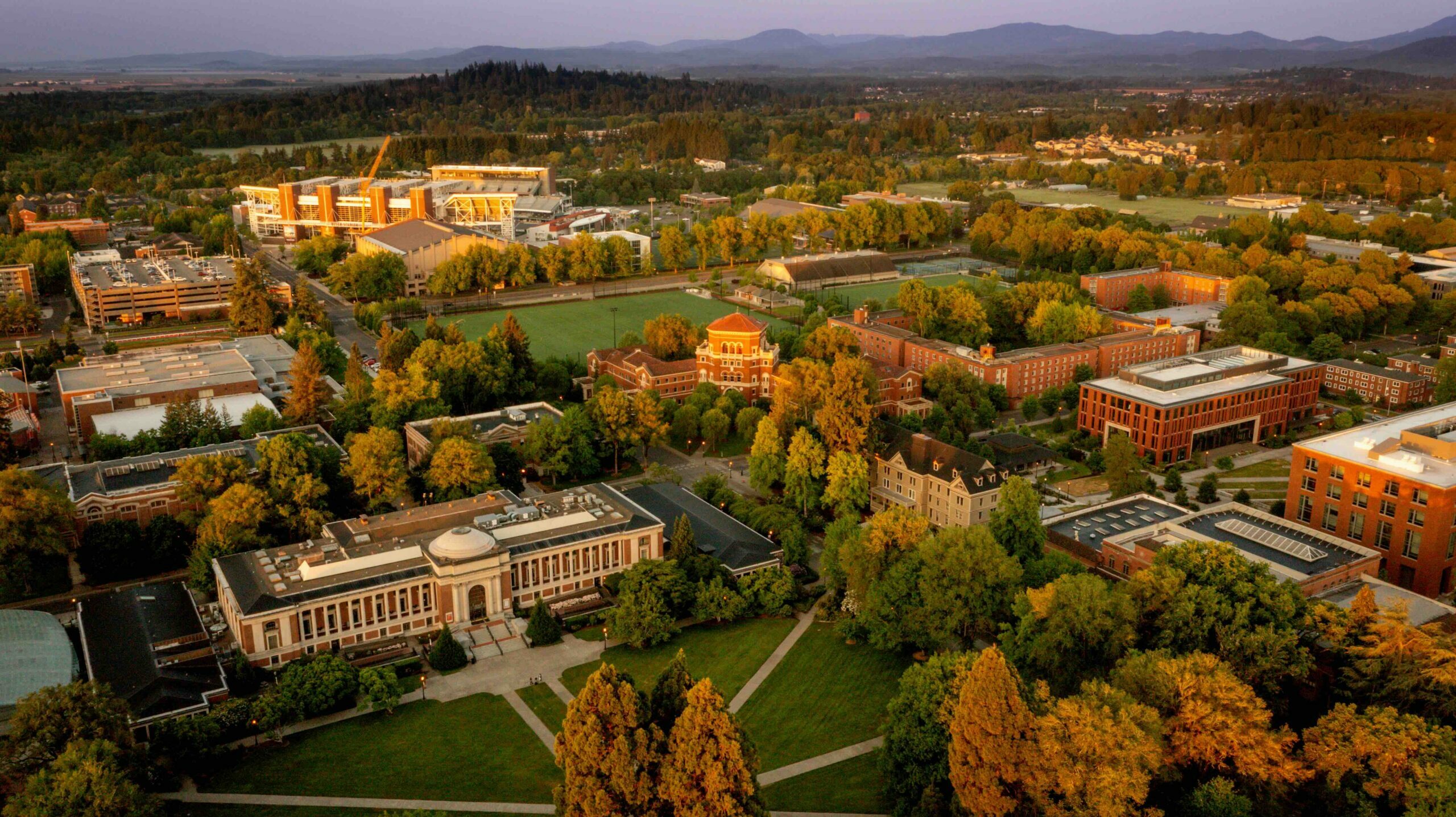
Oregon State University is a comprehensive public research university and Oregon’s land‑grant institution, with a main campus in Corvallis and a statewide footprint. Industry partners tap a statewide Extension network and county offices to pilot and scale solutions with communities and companies across Oregon. A coastal marine science campus in Newport anchors ocean research and provides access to open‑ocean wave‑energy test ranges and grid‑connected infrastructure under development nearby, enabling sea‑to‑shore prototyping. Field stations and university‑managed research forests support long‑term trials and product validation in real‑world environments. A dedicated technology transfer office and the OSU Advantage programs—including the Advantage Accelerator—streamline IP, licensing, startup formation, and industry agreements.Top industry applications
Top industry applications are determined by Halo’s AI based on publication data and partnering evidence and are not influenced by the university. Read methodology.
Energy & natural resources
Forestry & land management
Oregon State University researchers are developing LiDAR, UAV, smartphone, and AI tools to inventory forests, map wildfire severity, estimate fuel loads and residues, and monitor road and soil damage. Their decision-support models and biomass supply-chain studies help agencies and timber companies reduce operational costs, target restoration, improve wildfire resilience, and turn forest residues into marketable bioenergy and renewable fuels.Digital & computing technologies
Robotics & autonomous systems
Oregon State researchers are advancing autonomous robots for marine inspection, environmental monitoring, disaster response, and precision agriculture, including coordinated underwater vehicles and closed-loop orchard pruning systems. Their work addresses costly, hazardous, and labor-intensive operations while enabling commercial markets for robotic harvesting, infrastructure inspection, search and rescue, and autonomous ocean services.Agriculture
Plant breeding and genetics
Oregon State University researchers use genomics, marker-assisted selection, machine learning, and gene editing to develop disease-resistant, climate-ready varieties of potatoes, wheat, barley, hazelnuts, hops, grapes, hemp, and forest trees. Their tools and breeding lines can shorten cultivar development, reduce pesticide and water needs, stabilize yields, and create commercial opportunities for seed, food, brewing, nursery, and forestry industries.Industrial materials
Electronic materials
Oregon State researchers develop solution-processed metal-oxide photoresists, amorphous-metal thin-film transistors, transparent conducting oxides and high-purity fluorinated etchant gases for semiconductor lithography, display backplanes and advanced packaging. A collaboration with HP Inc. beginning in the mid-2000s produced the first transparent transistor and the photoresist lineage that became Inpria, acquired by JSR for $514 million, alongside spinouts Amorphyx, Valliscor, Phosio and nexTC. Materials partners gain access to a chemistry group with a demonstrated record of moving laboratory formulations into qualified semiconductor manufacturing.Energy & natural resources
Nuclear energy applications
Oregon State operates a research reactor and integral-effects test facilities supporting passive-safety thermal hydraulics, molten-salt materials testing and radiation services for advanced reactor designs. The university's small modular reactor research was commercialized by NuScale Power, headquartered in Corvallis, in which Oregon State holds equity and royalty rights on the first thirty-six modules sold; NuScale received NRC approval of its 77 MWe standard design in May 2025. Reactor developers and component suppliers can access licensed test infrastructure and radiation facilities that few universities operate.Agriculture
Pest and disease management
Oregon State University researchers are developing rapid pathogen diagnostics, disease forecasting tools, resistant crop varieties, and precision application methods to help growers detect threats earlier and reduce crop losses. Their work also advances biological control, nonchemical weed and pest suppression, and targeted pesticide strategies, creating opportunities for diagnostics companies, biocontrol developers, seed breeders, and precision-agriculture providers.Agriculture
Veterinary medicine & animal health
Oregon State researchers are developing field-ready PCR, eDNA, MALDI-TOF, and AI diagnostics for cattle, salmon, oysters, poultry, and companion animals, enabling faster outbreak control and reducing production losses. Their work also advances vaccines, phage therapies, parasite treatments, nutritional strategies, and precision-livestock tools that support healthier animals, more resilient farms, and growing aquaculture and veterinary markets.Medicine
Medical diagnostics
Oregon State researchers are developing low-cost, portable diagnostic platforms, including electrochemical, microfluidic, optical, and wearable sensors for cortisol, serotonin, proteins, pathogens, glucose, and seizures. These technologies could enable faster point-of-care testing and continuous monitoring, creating commercial opportunities in decentralized care, clinical laboratories, and digital health.Last updated by Halo AI Sep 21, 2026. Please verify key information. OpenAlex
For general inquiries
GS
Govinda Shrestha
University Administrator, Oregon State University
Have a specific need?
Post a free request to Oregon State University faculty.
Post a free request to Oregon State University faculty.
Top industry applications

Partner smarter. Move faster.
Get new partnering requests
delivered to your inbox.
delivered to your inbox.
© 2026 Halo Cures, Inc.