
Northwestern University
Evanston, Illinois, US
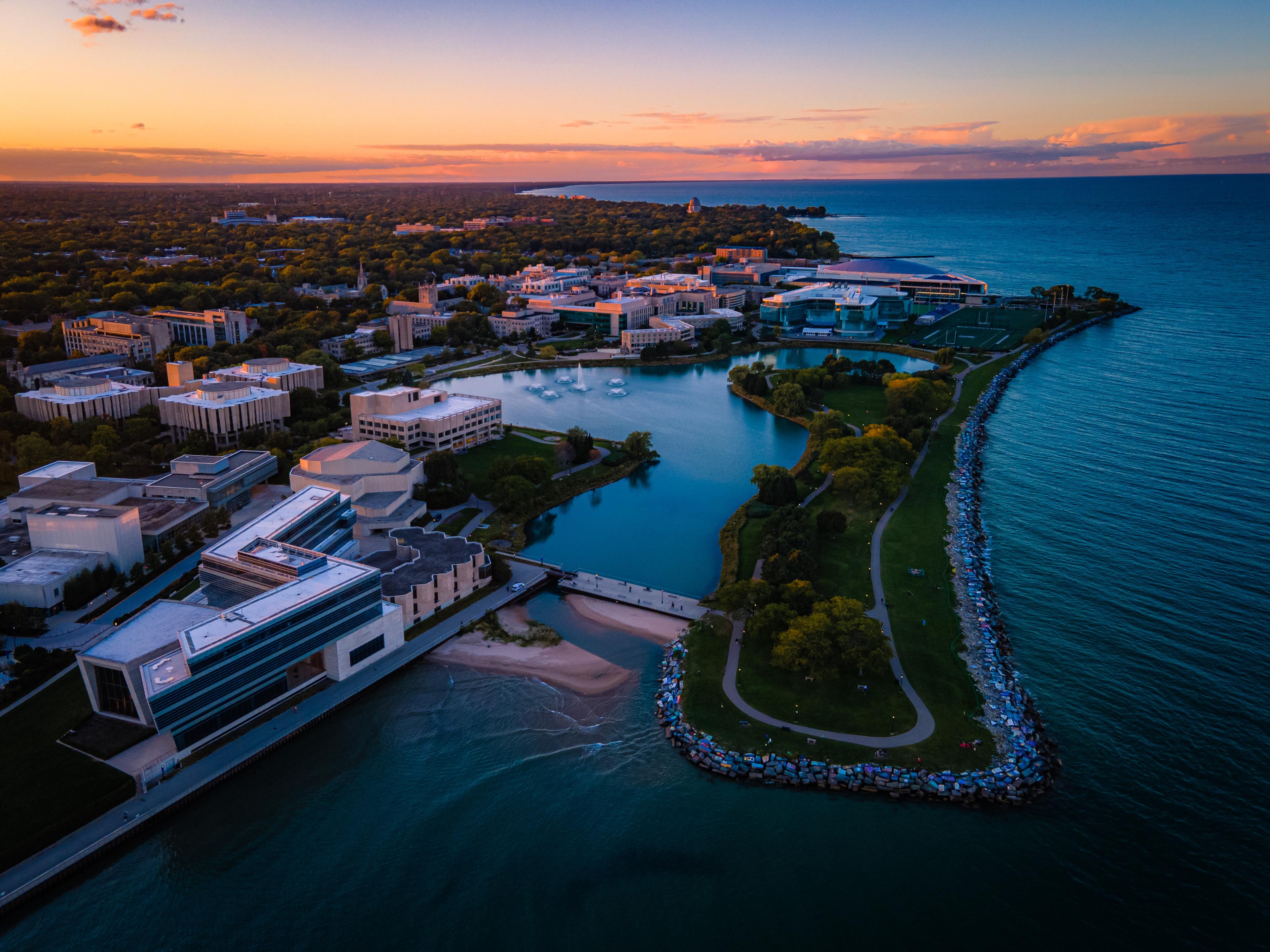
Private research university in Evanston and Chicago with integrated academic medical center, shared core facilities, clinical trials infrastructure, a campus incubator, and corporate engagement services. Chicago’s Fortune 500 hub nearby accelerates partnerships and translation.
Northwestern University is a comprehensive private research university with campuses in Evanston and downtown Chicago and a collaborative, cross‑disciplinary culture. Integration with a major hospital system enables clinical research, diverse patient access, and rapid translation from bench to bedside. Shared research cores, prototyping facilities, a campus incubator, and dedicated corporate engagement teams make it straightforward to scope projects, structure agreements, and place talent. Research is supported by competitive federal funding from agencies such as NIH, NSF, DOE, and DoD, complemented by foundation and industry partnerships. A dedicated technology transfer office advances IP strategy, licensing, and startup formation.Top industry applications
Top industry applications are determined by Halo’s AI based on publication data and partnering evidence and are not influenced by the university. Read methodology.
Medicine
Medical diagnostics
Northwestern researchers are developing rapid blood- and urine-based pathogen tests, circulating-tumor-DNA assays, proteomic biomarkers, and AI tools for imaging and pathology. These technologies target faster sepsis detection, earlier cancer diagnosis, transplant rejection monitoring, and more accessible disease screening. Wearable sweat, electrochemical, and imaging platforms could enable decentralized, continuous diagnostics for hospitals, clinics, and home care.

Medicine
Pharmaceuticals and drug delivery
Northwestern researchers are engineering exosomes, lipid nanoparticles, micelles, and enzyme-responsive carriers to deliver RNA, drugs, and immunotherapies precisely to tumors, damaged organs, and immune cells. These platforms could improve treatment efficacy, reduce off-target toxicity, and support commercial pipelines in oncology, gene therapy, vaccines, and regenerative medicine.Relevant Innovators
NG
Nathan Gianneschi
Principal Investigator
Cardiovascular healthPharmaceuticals and drug delivery
Cardiovascular healthPharmaceuticals and drug delivery
Joshua Leonard
CSO
Pharmaceuticals and drug deliveryRegenerative medicine
Pharmaceuticals and drug deliveryRegenerative medicineMW
Muzhou Wang
Researcher
Pharmaceuticals and drug delivery
Pharmaceuticals and drug deliveryMedicine
Medical imaging
Northwestern University researchers are developing explainable AI, radiomics, and advanced MRI, CT, PET, mammography, and retinal imaging tools for earlier diagnosis, risk stratification, and treatment planning. Their work targets deployable clinical software that improves accuracy across hospitals, reduces unnecessary biopsies and procedures, and supports growing markets for precision diagnostics and imaging automation.Relevant Innovators
Medicine
Immunology & immune-mediated disease
Northwestern researchers pursue antigen-specific immune tolerance across food allergy, autoimmunity and transplant—tolerizing nanoparticle platforms, regulatory T cell biology, and oral immunotherapy carried through controlled trials. The work spun out COUR Pharmaceuticals, now backed by the Roche, Pfizer, Bristol Myers Squibb and Sanofi venture arms across roughly $180 million raised, with clinical-stage programs in type 1 diabetes, primary biliary cholangitis and myasthenia gravis, alongside TRACT Therapeutics, a transplant-tolerance cell therapy acquired in 2025 after reaching Phase 2. Partners in autoimmunity, allergy and transplant gain a tolerance platform already carrying clinical proof points.Relevant Innovators
SW
Sam Weinberg
Principal Investigator
Immunology & immune-mediated diseaseInfectious disease & antimicrobialsOncology & cancer therapeutics
Immunology & immune-mediated diseaseInfectious disease & antimicrobialsOncology & cancer therapeuticsStephanie C. Eisenbarth
Unclaimed
Immunology & immune-mediated disease
Immunology & immune-mediated diseaseBooki Min
Unclaimed
Immunology & immune-mediated disease
Immunology & immune-mediated diseaseDigital & computing technologies
Artificial intelligence & machine learning
Northwestern researchers build natural language generation, analogical reasoning architectures, generative audio models, and foundation-model methods, spanning computer science, engineering and the Kellogg School. Narrative generation research licensed out of Northwestern became Narrative Science, acquired by Salesforce in 2021 and folded into Tableau, while data mining work from the engineering school became 4C Insights, acquired by Mediaocean in 2020. The Center for Deep Learning gives corporate members—Allstate and TransUnion among them—structured access to faculty expertise and applied deep learning capacity.Relevant Innovators
Medicine
Oncology & cancer therapeutics
Northwestern researchers are developing cancer therapies that target tumor metabolism, epigenetic vulnerabilities, immune suppression, and resistance mechanisms across prostate, ovarian, pancreatic, brain, and blood cancers. Their work also advances liquid biopsies, AI pathology and imaging, engineered cell therapies, and nanoparticle drug delivery—creating commercial opportunities for precision diagnostics, companion biomarkers, and more effective targeted treatments.Relevant Innovators

Peng Zhang
Principal Investigator
Immunology & immune-mediated diseaseOncology & cancer therapeutics
Immunology & immune-mediated diseaseOncology & cancer therapeuticsVB
Vadim Backman
Research Associate
Oncology & cancer therapeutics
Oncology & cancer therapeuticsEdward M. Schaeffer
Unclaimed
Medical diagnosticsOncology & cancer therapeuticsPersonalized medicine
Medical diagnosticsOncology & cancer therapeuticsPersonalized medicineMedicine
Neurology & neurological disease
Northwestern researchers are developing wearable myoelectric interfaces, exoskeletons, smartphone eye tracking, and AI imaging tools to improve stroke rehabilitation, Parkinson’s monitoring, and personalized neurological care. Their biomarker, neuromodulation, and neural-interface programs also support commercial opportunities in early diagnosis, remote monitoring, targeted therapies, and next-generation rehabilitation devices.Relevant Innovators
Alfred L. George
Unclaimed
Neurology & neurological diseasePersonalized medicine
Neurology & neurological diseasePersonalized medicineP. Hande özdi̇nler
Unclaimed
Neurology & neurological diseasePharmaceuticals and drug delivery
Neurology & neurological diseasePharmaceuticals and drug deliveryJoseph R. Mazzulli
Unclaimed
Neurology & neurological diseasePharmaceuticals and drug delivery
Neurology & neurological diseasePharmaceuticals and drug deliveryPersonal health
Digital health applications
Northwestern researchers are developing smartphone-based cognitive, depression, suicide-risk, and Parkinson’s screening tools, alongside apps for cancer survivorship, eating disorders, diabetes, and stroke rehabilitation. Their wearable sensors and remote-monitoring platforms enable earlier detection, personalized care, and scalable support outside clinics—creating opportunities for digital therapeutics, clinical decision tools, and connected-health products.Relevant Innovators
Michael Wolf
Unclaimed
Digital health applicationsMedical diagnostics
Digital health applicationsMedical diagnosticsNabil Alshurafa
Unclaimed
Diet and weight managementDigital health applicationsPreventive health monitoring
Diet and weight managementDigital health applicationsPreventive health monitoring
Andrea K. Graham
Principal Investigator
Digital health applications
Digital health applicationsLast updated by Halo AI Sep 2, 2026. Please verify key information. OpenAlex
OpenAlexFor general inquiries
AC
Anne Champagne
University Administrator, Northwestern University
Have a specific need?
Post a free request to Northwestern University faculty.
Post a free request to Northwestern University faculty.

Partner smarter. Move faster.
Get new partnering requests
delivered to your inbox.
delivered to your inbox.
© 2026 Halo Cures, Inc.