
- Background
- What we're looking for
- What we can offer you
- Who we are
- Q&A
Pectin production involves extracting soluble pectin from citrus peels and apple pomace, leaving behind significant quantities of residual material. After extraction and primary separation, a wet, fibrous biomass remains, alongside smaller quantities of fine residues generated during clarification steps. These side streams, typically called spent peels or used citrus peels, can contain structural polysaccharides, residual pectin, sugars, organic acids, and minerals.
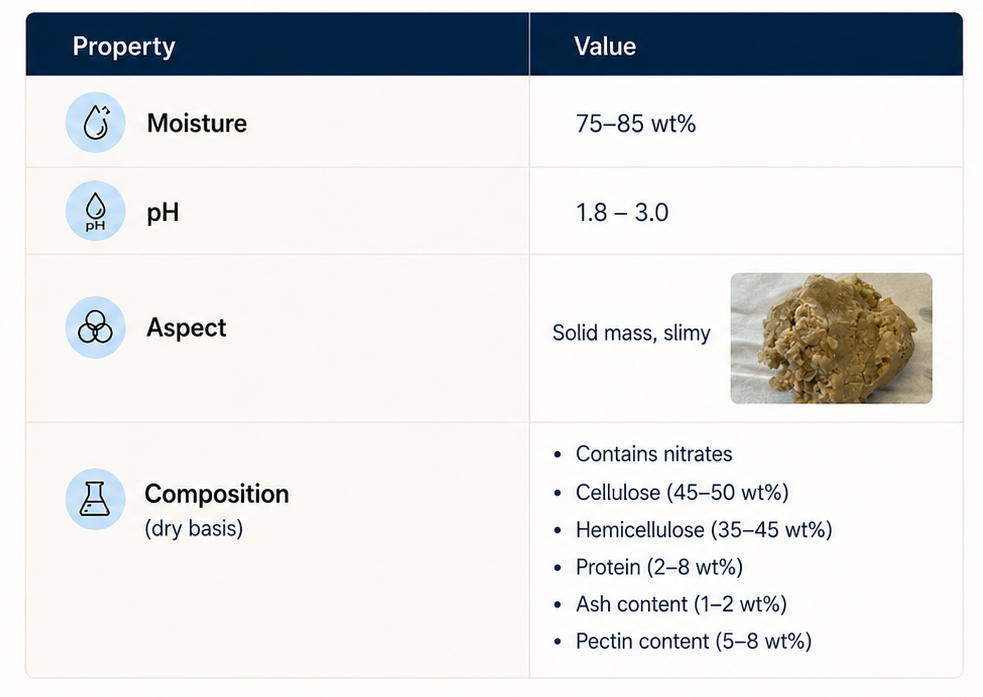
Currently, these materials are typically managed through low-value routes such as neutralization and disposal or energy recovery, which can incur costs and underutilize their potential. Their high moisture content, variable composition, and exposure to process conditions can limit reuse options, while regulatory constraints may restrict applications in areas such as food. However this should not limit the use and application of the spent peels. Where necessary, the regulatory aspect needs to be looked at.
New approaches that enable the extraction, fractionation, or transformation of these side streams into functional materials or industrial inputs could unlock the value embedded in them and enable their integration into higher-value applications. This would reduce reliance on disposal routes and support more sustainable and circular production practices.
We are looking for approaches to valorize side streams generated during pectin production, through extraction, separation, transformation, or reuse in other applications, with a focus on fibrous residues from extraction. Approaches addressing additional streams, such as filtration residues or spent filtration aids, are also of interest.
- Physical, chemical, or biological transformation routes
- Extraction of residual pectin or valuable polysaccharides
- Fractionation of fibrous residues into functional components
- Conversion into non-food industrial fiber products
- Use as feedstock for bio-based materials or composites
- Fermentation into organic acids, enzymes, or biochemicals
- Anaerobic digestion with improved biogas yield
- Production of biochar, adsorbents, or soil amendments
- Recovery of sugars, acids, or minerals
- Circular reuse in paper, packaging, or textile applications
- Dewatering or conditioning to enable higher-value reuse
- Considers the composition and variability of the side streams
- Demonstrates a clear pathway to industrial scalability or implementation
- Provides a rationale for how value can be generated from the side streams
- Integrates into existing industrial operations with minimal modifications
- Enables valorization without extensive pre-treatment or conditioning steps
- Takes into account relevant regulatory constraints for the proposed application
- Solutions that rely on disposal routes without creating additional value
Our global team includes more than 1,500 research, development, applications, technical services and intellectual property specialists working in more than 200 locations. Together, they provide a spectrum of services encompassing technical service, applications, development, research, intellectual asset management, and scientific and regulatory affairs.
Learn moreThe Q&A is now closed.


Other recommended requests

delivered to your inbox.